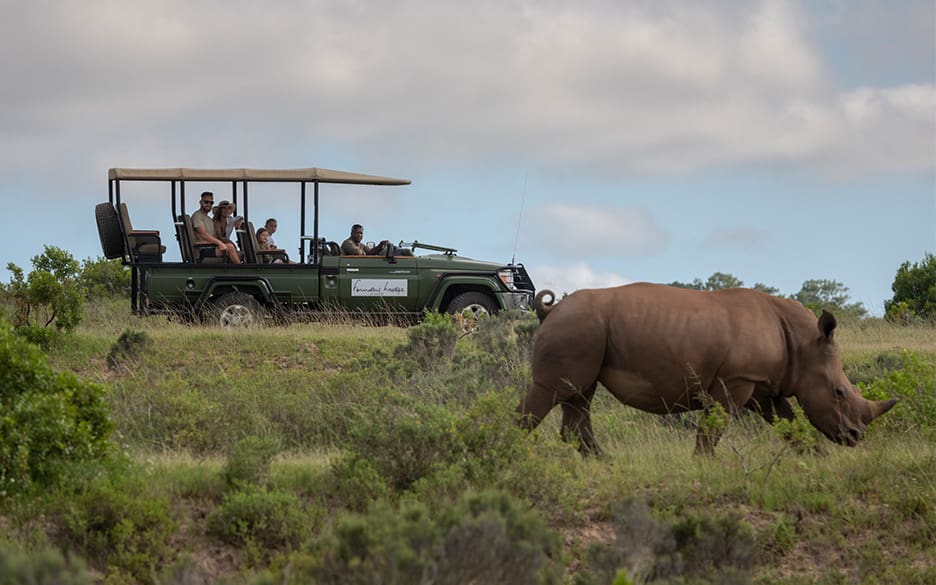
One of the most common questions in safari planning is whether malaria medication is required. For many travellers, families with young children, pregnant travellers, and anyone who prefers to avoid medication, the answer influences where they choose to go.
South Africa is one of the few Big Five destinations that offers a malaria-free safari. This guide explains which regions of the country are malaria-free, why the Eastern Cape qualifies, and what a malaria-free safari means in practice.
In this guide
- The short answer
- Which parts of South Africa are malaria-free
- Why the Eastern Cape is malaria-free
- What malaria-free means for your trip
- Does malaria-free mean fewer animals?
- Malaria-free at a glance
- Questions travellers ask
The Short Answer
Most of South Africa is malaria-free, including the entire Eastern Cape, where Founders Lodge is located. Malaria risk is limited to the low-lying north-east of the country, chiefly the Lowveld around the Kruger National Park, and the far north of KwaZulu-Natal.
A safari in the Eastern Cape therefore requires no antimalarial medication and no malaria precautions. As with any travel, current health guidance should be confirmed with a travel clinic before departure.
Which Parts of South Africa Are Malaria-Free?
South Africa is unusual among Big Five countries in that malaria is confined to a small part of it. The majority of the country carries no malaria risk.
Malaria-free (no medication required): the Eastern Cape, the Western Cape and Cape Town, the Garden Route, the Free State, the Northern Cape and most of the interior. A number of South Africa’s malaria-free safari reserves are located in the Eastern Cape.
Malaria-risk areas (seasonal precautions advised): the Lowveld of Mpumalanga and Limpopo, which includes the Kruger National Park and the private reserves along its boundary, and the far north of KwaZulu-Natal, along the Maputaland coast. Transmission in these areas is seasonal, and higher during the warmer, wetter months from roughly September to May.
The practical distinction is straightforward: a Kruger-area safari is in a malaria region; an Eastern Cape safari is not.
Why the Eastern Cape Is Malaria-Free
The reason is geographical. Malaria transmission in southern Africa depends on the Anopheles mosquito and a warm, low-altitude climate. The Eastern Cape’s safari region does not provide those conditions, so the disease is not established there.
This is not a seasonal lull or a low-risk qualification. The region sits outside the malaria zone entirely, which is why Founders Lodge can offer a Big Five safari, reached with traversing rights on Shamwari, with no malaria consideration attached.
What Malaria-Free Means for Your Trip
No antimalarial medication
There is no course of tablets to take before, during and after the trip, and no associated side effects to plan around. Antimalarial medications carry age, weight and pregnancy restrictions, which is one reason a malaria-free reserve matters to the travellers it affects most.
Simpler for families
Antimalarial options for young children are limited, which places much of the Lowveld out of reach for families with small children. A malaria-free reserve removes that barrier, and is one of the reasons the Eastern Cape is a natural choice for a family safari.
Suitable for pregnant and medication-averse travellers
For travellers who cannot, or would prefer not to, take prophylaxis, a malaria-free region simplifies the decision. Individual circumstances should always be discussed with a medical professional.
Does Malaria-Free Mean Fewer Animals?
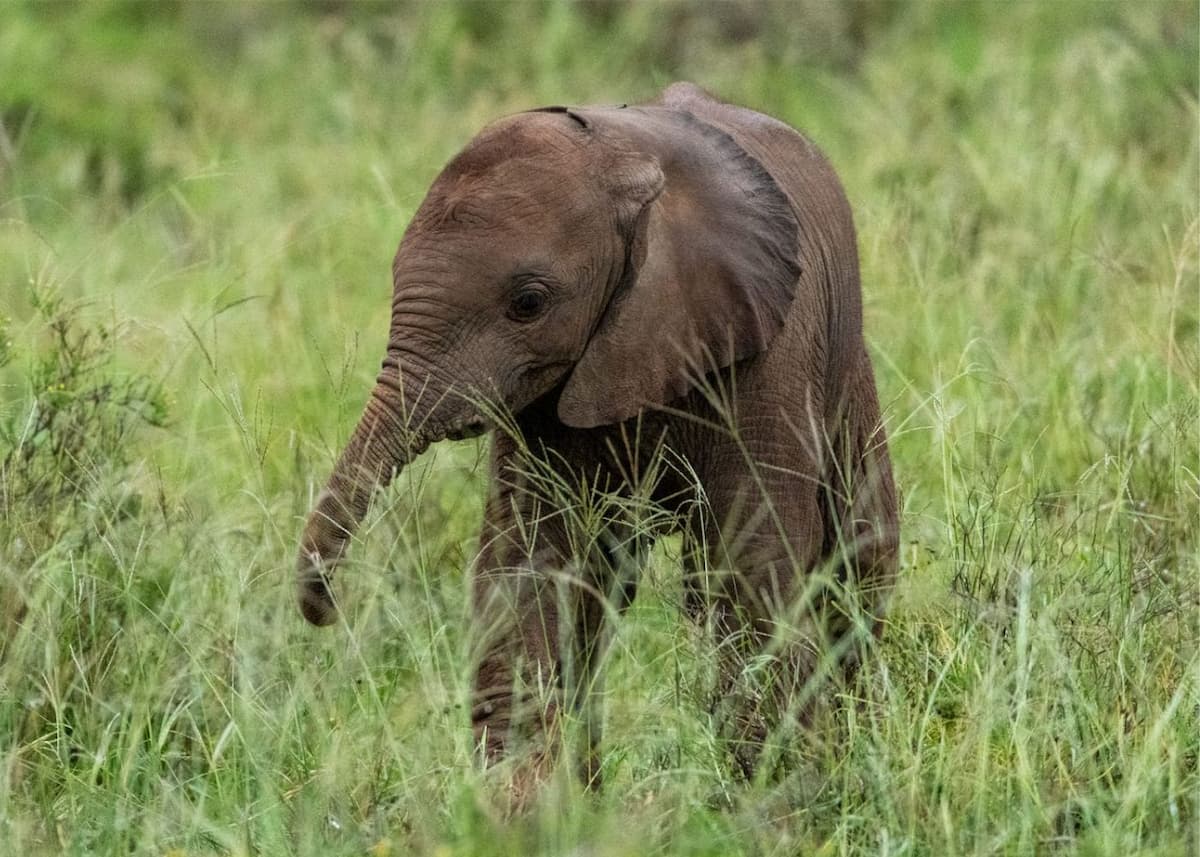
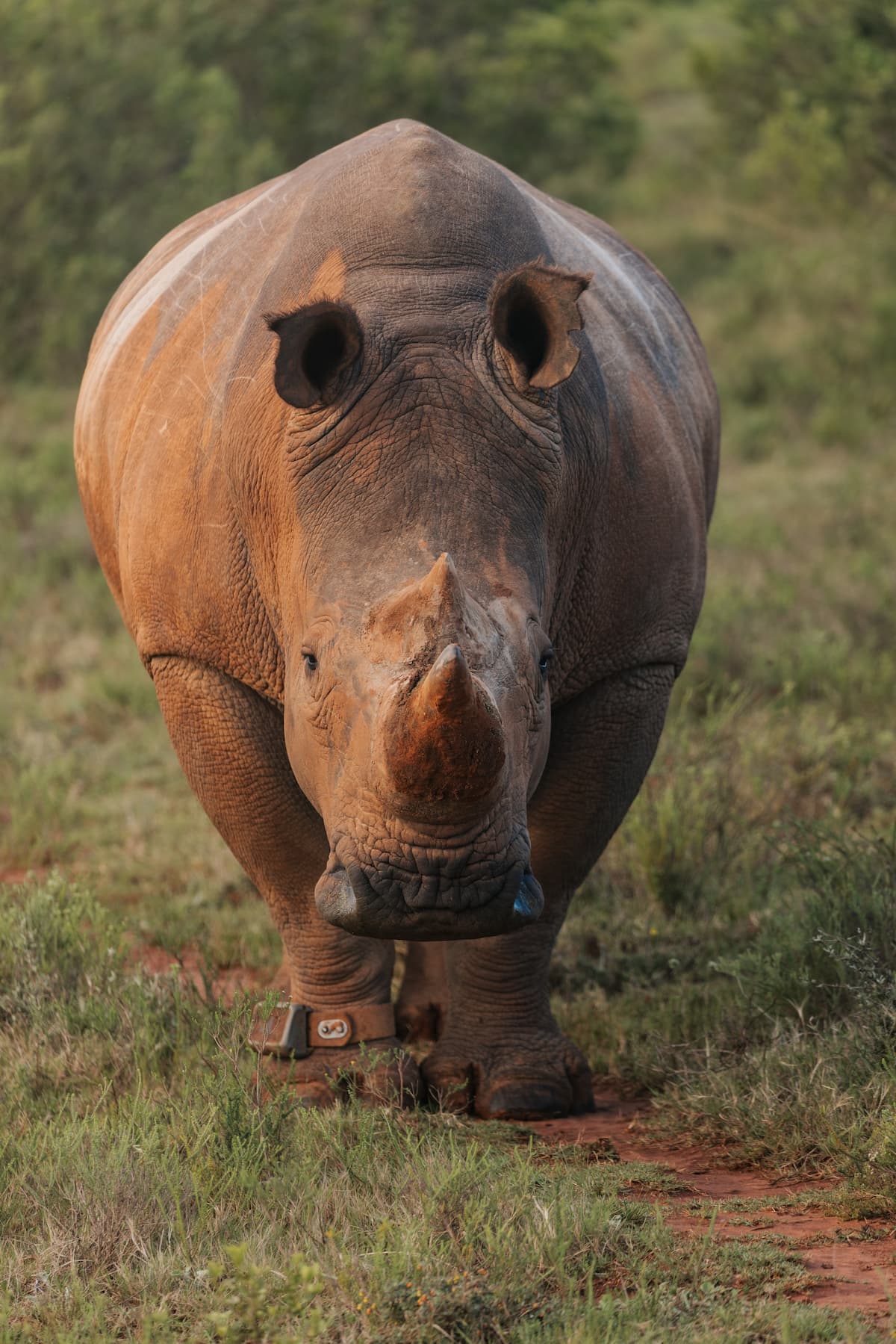
No. Malaria-free does not indicate a lesser safari. The Eastern Cape offers the full Big Five, along with a wide diversity of other wildlife and birdlife; it is simply located outside the malaria belt.
As with any reserve, no lodge can guarantee particular sightings, since wildlife is free-ranging. The Eastern Cape’s game viewing is strong in its own right, and independent of any trade-off on health.
Malaria-Free at a Glance
| Region | Malaria status | Big Five |
|---|---|---|
| Eastern Cape (incl. Founders Lodge) | Malaria-free | Yes |
| Western Cape / Garden Route | Malaria-free | Limited reserves |
| Kruger & Lowveld (Mpumalanga / Limpopo) | Seasonal malaria risk | Yes |
| Far northern KwaZulu-Natal (Maputaland) | Seasonal malaria risk | Yes |
Questions travellers ask
Is there a malaria-free safari in South Africa?
Yes. Most of South Africa is malaria-free, including the entire Eastern Cape, where a full Big Five safari is possible with no antimalarial medication. Malaria risk is limited to the north-eastern Lowveld (the Kruger area) and the far north of KwaZulu-Natal.
Is the Eastern Cape malaria-free?
Yes. The Eastern Cape’s safari region, including Founders Lodge, is malaria-free, and no prophylaxis or malaria precautions are required. Current health guidance should be confirmed with a travel clinic before travelling.
Do I need malaria pills for a South African safari?
It depends on the destination. For a Kruger-area or northern KwaZulu-Natal safari, antimalarials are commonly advised. For an Eastern Cape safari, they are not required. A travel clinic can advise for a specific itinerary.
Is Kruger National Park malaria-free?
No. Kruger lies in a seasonal malaria area, so precautions are usually advised. Travellers who prefer to avoid antimalarials often choose a malaria-free Eastern Cape reserve instead.
Can you see the Big Five on a malaria-free safari?
Yes. Malaria-free reserves in the Eastern Cape offer the full Big Five. Being outside the malaria zone does not reduce the wildlife, though no lodge can guarantee specific sightings.
Is a malaria-free safari better for families?
For families with young children it often is, because antimalarial options for children are limited. A malaria-free reserve removes that concern. Any health questions should be confirmed with a doctor or travel clinic.
Continue reading
- → Why the Eastern Cape Is South Africa’s Most Underrated Big Five Safari
- → Safari for Families & Multigenerational Travel in South Africa
- → Founders Lodge Safari FAQ
Malaria is often the deciding factor between the Lowveld and the Eastern Cape. The wider comparison is in Kruger versus a private game reserve.