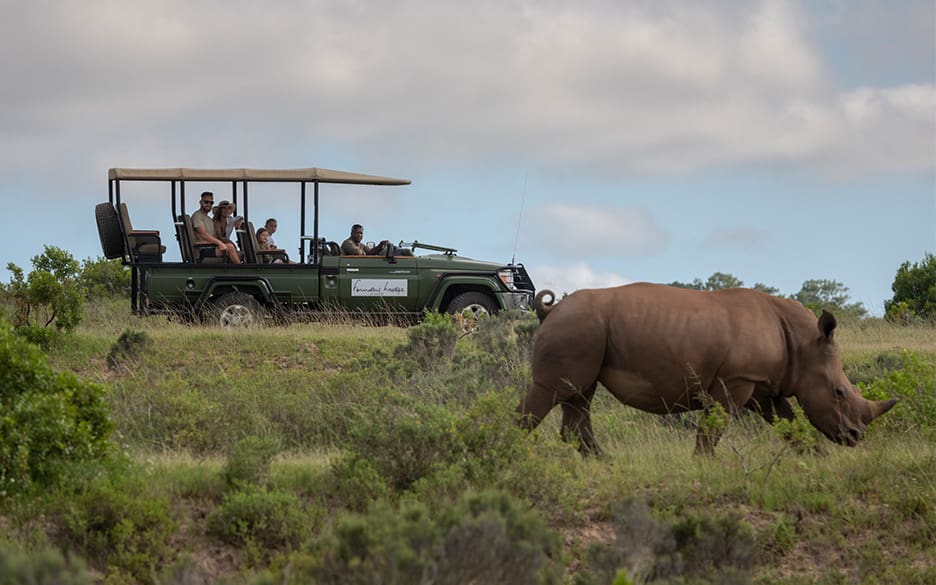
When travellers think of a safari in South Africa, the same regions tend to dominate the conversation. Yet beyond the well-known names lies a part of the country offering a quieter, highly rewarding alternative: the Eastern Cape.
In this guide
- What Makes the Eastern Cape Different for Safari Travel
- Big Five Safari in a Malaria-Free Region
- Accessibility: Safari Close to Gqeberha (Port Elizabeth)
- Conservation Success in the Eastern Cape
- Is the Eastern Cape Right for First-Time Safari Guests?
- Where Founders Lodge Fits Into the Eastern Cape Safari Landscape
- Planning an Eastern Cape Safari
For travellers seeking a Big Five safari that is accessible, malaria-free, and less congested, the Eastern Cape presents a compelling option one that is often overlooked simply because it is less loudly marketed.
This guide explains what sets the Eastern Cape apart, what kind of safari experience it offers, and why it has become an increasingly popular choice for international visitors planning their first or next African safari.
What Makes the Eastern Cape Different for Safari Travel
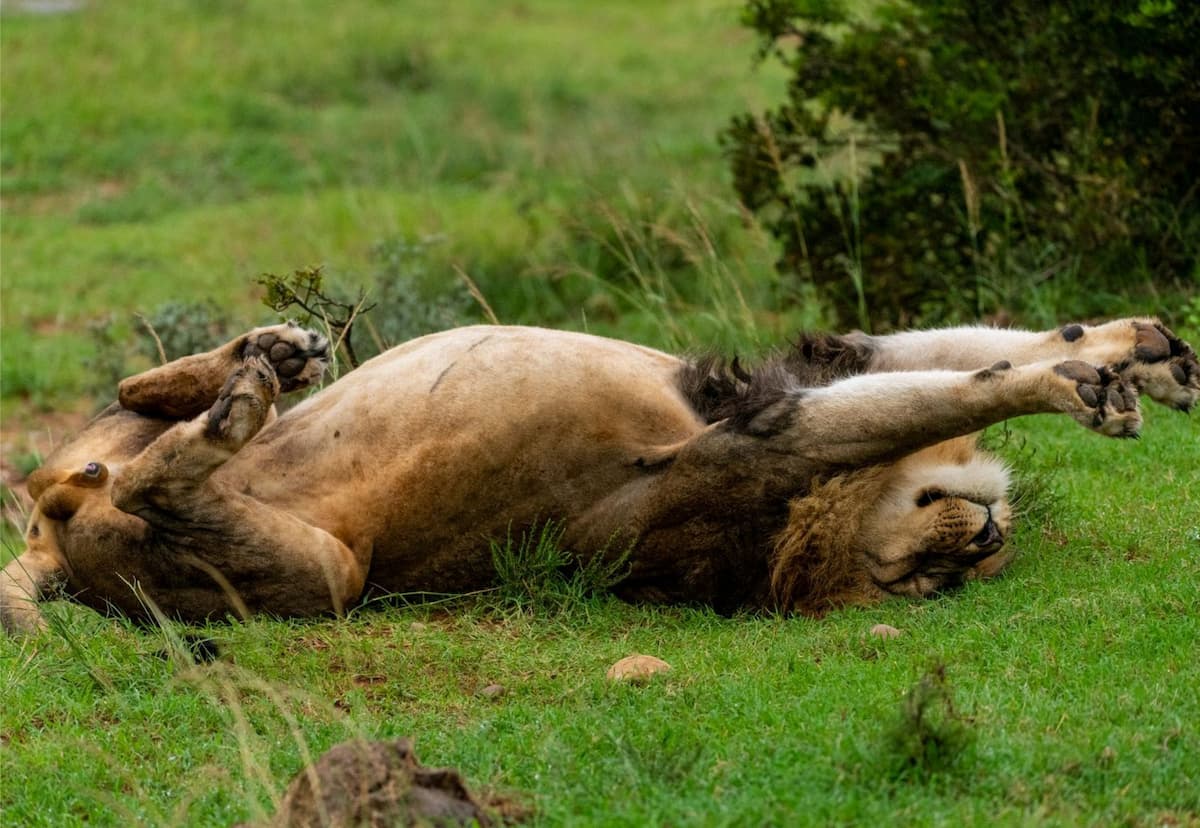
The Eastern Cape occupies a unique position in South Africa’s safari landscape. Historically a region where wildlife populations were depleted through farming and development, it has undergone one of the country’s most successful private conservation recoveries.
Today, large tracts of restored land support diverse habitats ranging from open plains and river valleys to thicket and grassland. This ecological variety allows for strong wildlife viewing while maintaining a sense of space and calm that can be harder to find in more heavily trafficked safari regions.
Unlike some northern reserves, the Eastern Cape is not defined by vast distances between camps or long travel days. It is a region that works particularly well for travellers who value efficiency, comfort, and a well-paced itinerary.
Big Five Safari in a Malaria-Free Region
One of the Eastern Cape’s most significant advantages is that it is a malaria-free safari destination.
This makes it especially attractive to:
-
Families travelling with children
-
Honeymooners and couples
-
Older travellers
-
First-time safari guests who want a simpler planning process
Despite lingering misconceptions, malaria-free does not mean limited wildlife. The Eastern Cape offers reliable Big Five viewing, supported by carefully managed reserves and long-term conservation strategies.
For many international travellers, the ability to experience a Big Five safari without malaria precautions is a deciding factor.
Accessibility: Safari Close to Gqeberha (Port Elizabeth)
Ease of access is another reason the Eastern Cape stands out.
The region is served by Gqeberha (formerly Port Elizabeth), which is well connected to South Africa’s major international gateways. From the airport, many safari lodges are reached by road transfer in approximately one hour.
This contrasts with safari regions that require:
-
Multiple internal flights
-
Long road journeys
-
Overnight stopovers
For travellers with limited time, or those combining a safari with Cape Town or the Garden Route, the Eastern Cape fits naturally into a broader South African itinerary.
Conservation Success in the Eastern Cape
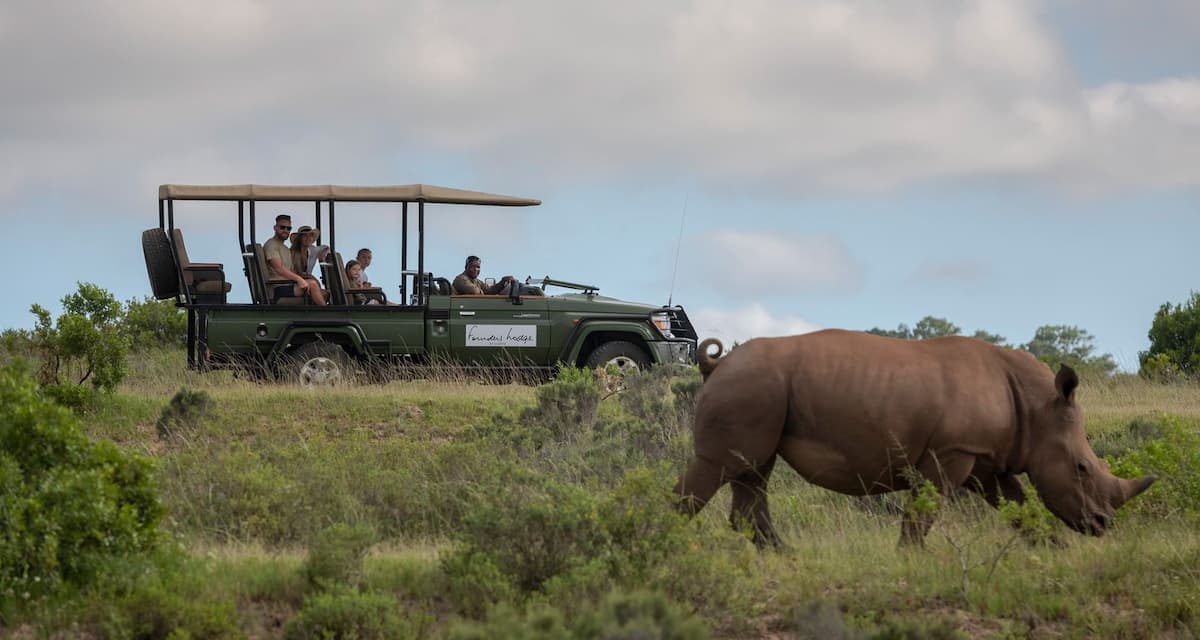
Modern safari experiences in the Eastern Cape are the result of deliberate and sustained conservation efforts.
Private landowners and conservationists began rewilding the region decades ago, reintroducing species, restoring natural vegetation, and reconnecting fragmented ecosystems. Over time, these initiatives transformed former farmland into functioning wildlife reserves.
Today, the Eastern Cape is widely regarded as one of South Africa’s conservation success stories. Wildlife populations are stable, habitats are actively managed, and tourism plays a direct role in supporting long-term environmental stewardship.
Modern safari experiences in the Eastern Cape are the result of deliberate and sustained conservation efforts.
Is the Eastern Cape Right for First-Time Safari Guests?
For travellers new to safari, the Eastern Cape offers several advantages:
-
A gentle introduction to wildlife viewing
-
Shorter, less demanding travel days
-
Fewer vehicles at sightings
-
A relaxed pace that prioritises observation over volume
Rather than chasing constant movement, safaris here often allow time to watch behaviour unfold whether at a waterhole, along a riverbed, or across open plains.
This approach appeals to guests who want to understand the landscape, not just tick animals off a list.
Where Founders Lodge Fits Into the Eastern Cape Safari Landscape
Within this region, Founders Lodge represents a more intimate safari style.
Located on a private reserve adjacent to a larger conservation area, the lodge combines:
-
A boutique scale with a limited number of suites
-
Access to a broader wildlife ecosystem through guided game drives
-
A conservation heritage rooted in the Eastern Cape’s rewilding story
This positioning allows guests to experience Big Five safari viewing while staying in a quieter, more personal environment an approach that reflects the broader strengths of the Eastern Cape as a destination.
Planning an Eastern Cape Safari
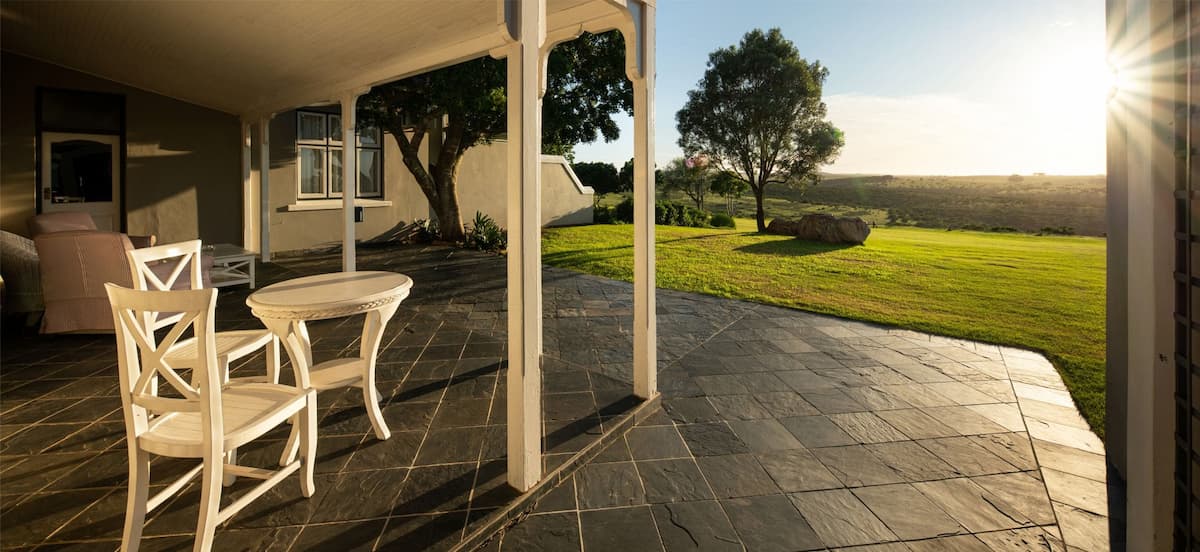
Choosing the right safari destination is about more than wildlife alone. Factors such as health considerations, travel logistics, pace, and lodge scale all shape the overall experience.
For travellers seeking a malaria-free Big Five safari that balances conservation, accessibility, and thoughtful hospitality, the Eastern Cape deserves careful consideration.
If you’re beginning your safari planning and have practical questions about wildlife, access, or what to expect, you may find answers in our Founders Lodge Safari FAQ, which covers common planning topics in detail.
Timing changes the character of an Eastern Cape safari more than most travellers expect. The season by season guide sets out what each part of the year offers.
Travellers weighing a national park against a private reserve will find the trade-offs set out in Kruger versus a private game reserve.
New to safari altogether? Start with your first safari in South Africa.