A safari day is easy to imagine and surprisingly hard to picture. Most of what people expect comes from film, where the waiting has been edited out.
What follows is the shape of an ordinary day at Founders Lodge, from the dark before sunrise to the last of the light. The pace is set by the animals. The lodge keeps up.
Early morning: before the light
The wake-up call comes before the sun. Tea and coffee are set out, with rusks, muffins, fruit, yoghurt and muesli for anyone who wants something before the vehicle.
It is colder than most guests expect, even in summer. The Eastern Cape is malaria-free all year round, which spares the tablets. It does not spare the pre-dawn chill. Layers matter.
The early start is not ceremony. Predators are still moving from the night’s hunting and the herds feed before the heat arrives. An hour later, most of that has gone quiet.
The morning drive: how a drive finds animals
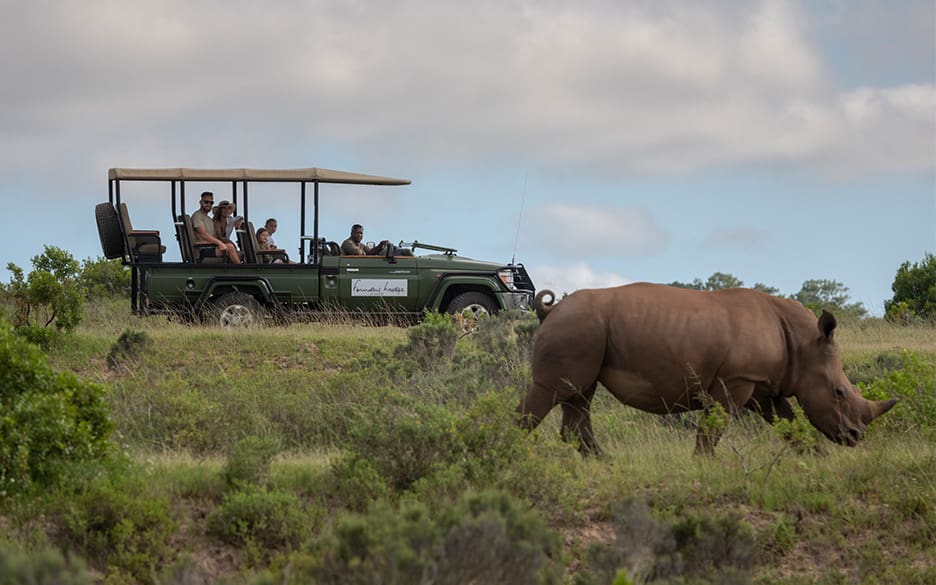
The drive has no fixed route. The ranger reads what is in front of the vehicle. Tracks in the sand, an alarm call somewhere off to the left, where the herds were the previous afternoon, and the morning takes its shape from that.
This is the part first-time visitors are least prepared for. A good drive contains a great deal of stopping. The vehicle sits with a herd rather than passing it, and guests watch an animal decide something.
The boutique scale of Founders Reserve means vehicles are not competing for a sighting, and traversing rights on Shamwari open a wider stretch of Big Five country when the animals have moved. Sightings are never guaranteed. Any operator who promises a leopard is selling something.
Not every outing is a drive. Walking safaris and the Tracks and Signs experience put guests on foot, where the ground records what passed in the night. Rhino Observation and Monitoring runs as working conservation rather than an activity staged for guests.
Midday: the long middle of the day
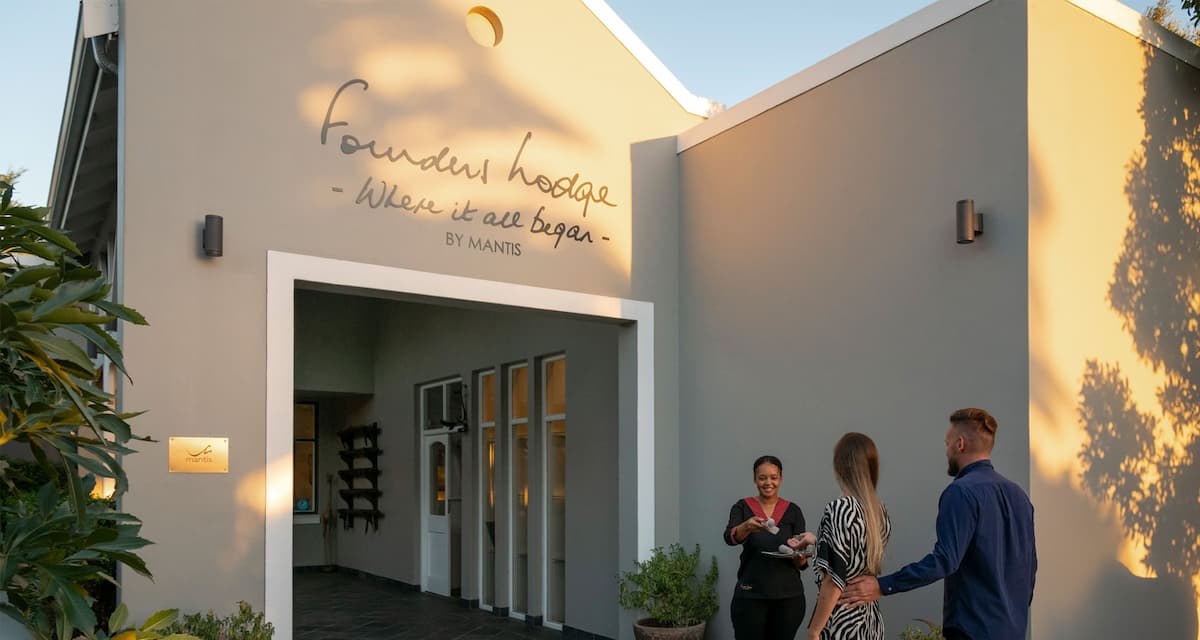
Breakfast, and then nothing in particular.
Midday in the bush is quiet by design. The animals lie up in whatever shade they can find, and most guests do the same. There are two pools and a steam room. The photographic hide is sunk into the ground at the level of the waterhole, which is the best place on the property to spend an hour doing very little.
This period is intentionally unstructured.
Guests arriving from a city itinerary often find this the hardest part of the day. By the second afternoon it is usually the part they mention.
Afternoon and evening: out again as it cools
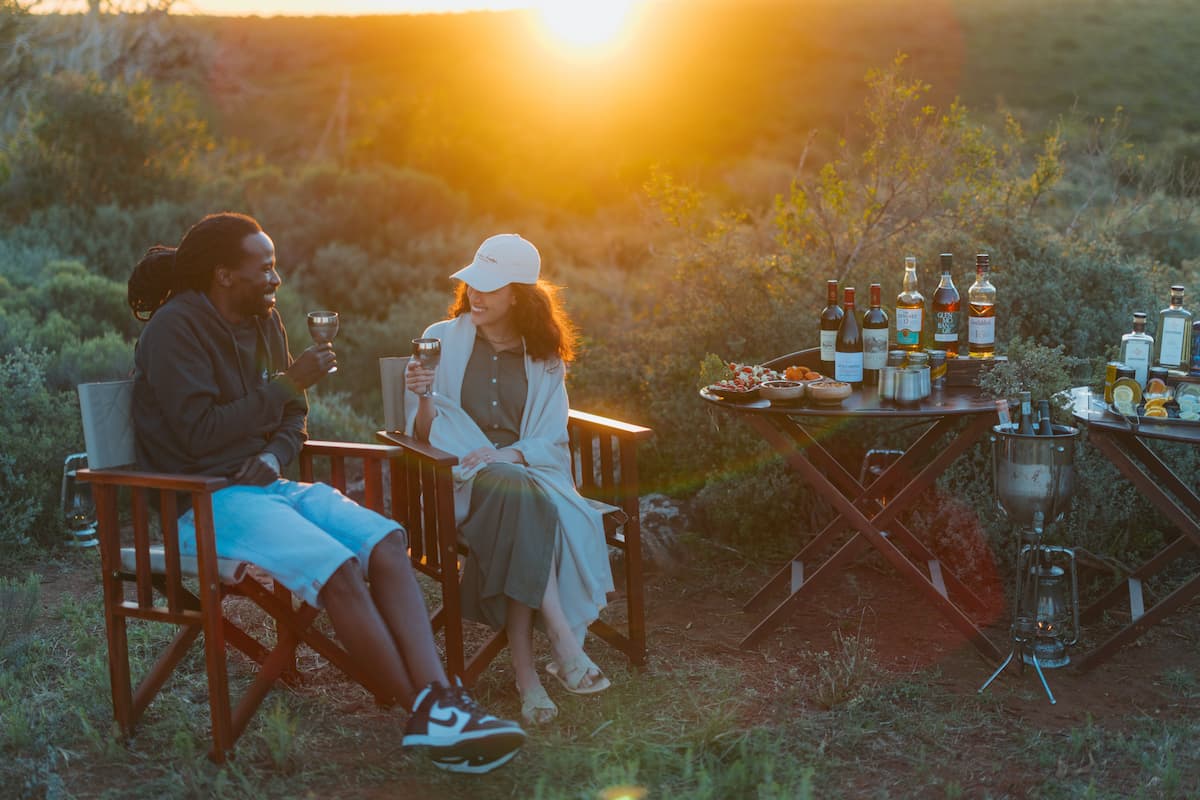
The second drive leaves in the late afternoon and runs on into the dark.
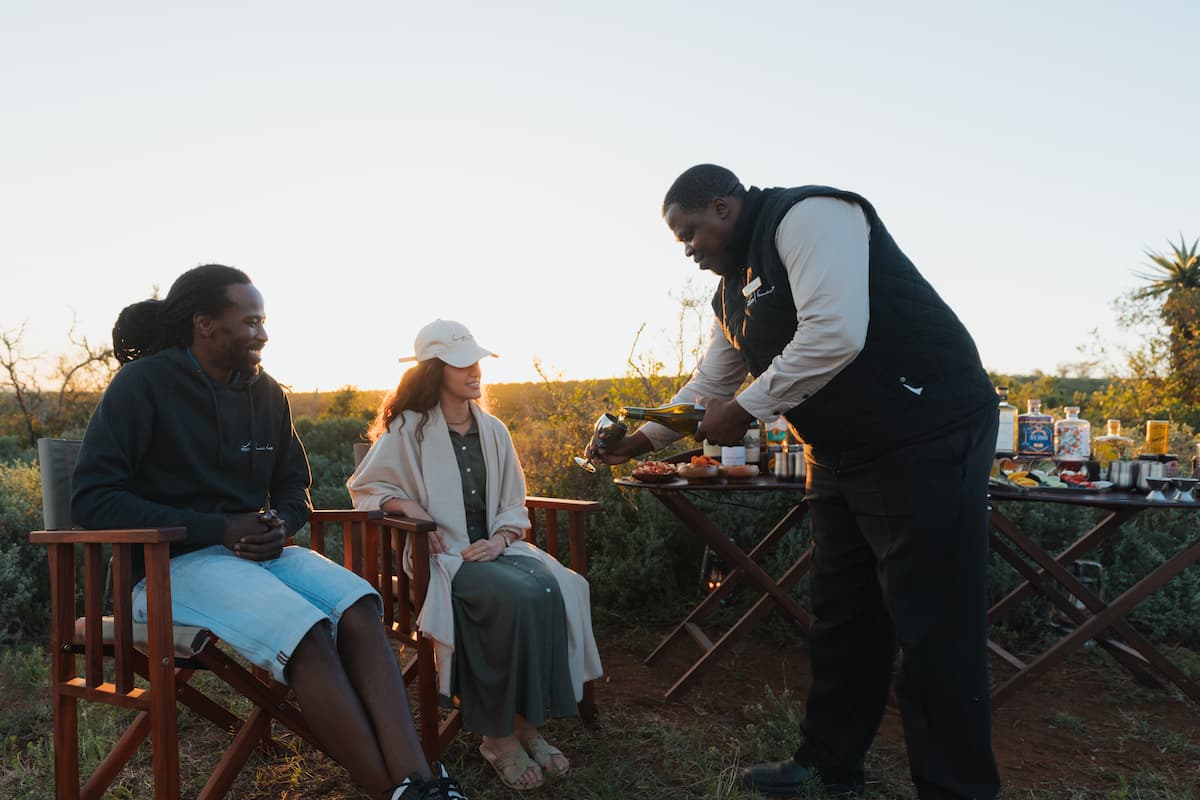
It is a different day. Different animals, different light, the ones that waited out the heat now moving towards water. Somewhere in the middle the vehicle stops, the tailgate comes down, and drinks and something to eat are set out while the light goes.
The drive returns to the Founders Bar. Dinner is served in a room that seats sixteen.
What shapes a safari day
Three things change how a safari day feels, and only one of them is the wildlife.
- Scale. Fewer rooms means fewer vehicles, and fewer vehicles means no queuing behind somebody else’s sighting.
- Range. Founders Reserve, with traversing rights on Shamwari beyond it, gives the guiding team more country to work with when the animals move.
- Pace. Nothing runs to a timetable except the two drives and dinner.
Whether this style of safari suits you
Safari is not a busy holiday, and material that makes it look like one does travellers no favours.
It is early mornings, long slow middles, and a good deal of sitting still while an animal decides whether to walk closer. For travellers who want to understand behaviour rather than tick off a list, this structure suits.
Practical questions about timings, inclusions and what to pack are answered in the Founders Lodge Safari FAQ. For anything else, contact Founders Lodge directly.