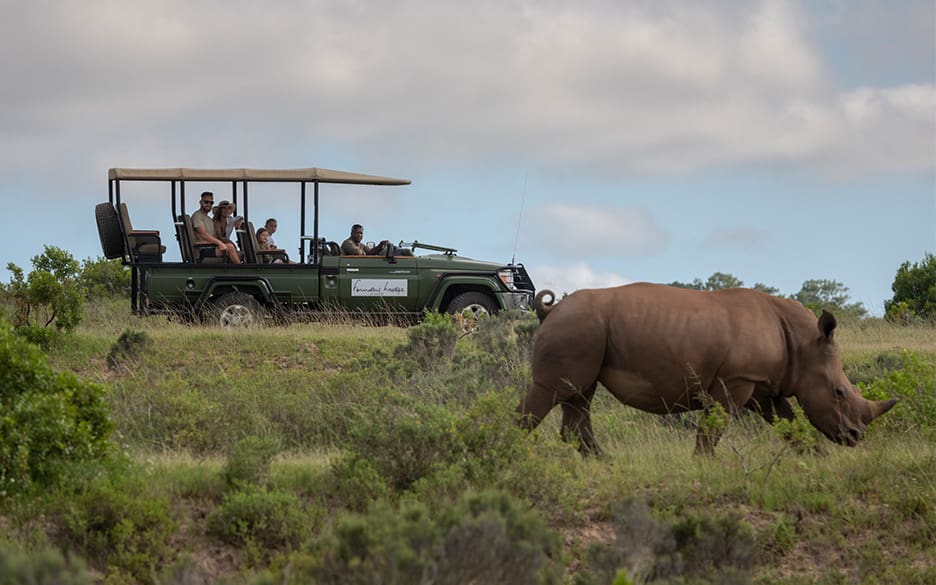
One of the first practical questions in safari planning is how many days to allow. Each additional night adds to the cost, while too short a stay can leave a trip feeling rushed. The answer depends on the type of reserve and the pace a traveller wants, but a clear framework makes the decision straightforward.
This guide sets out what each length of stay offers at a low-density private reserve, so travellers can plan a safari that suits both their itinerary and their budget.
In this guide
- The short answer
- Why nights matter more than days
- What each length offers
- How many days to see the Big Five?
- A sample three-night rhythm
- How the safari fits a wider trip
- How long should you stay?
The Short Answer
For a first safari at a private reserve, three nights is generally the ideal length. It allows the rhythm of the days to settle, gives the reserve time to reveal more than it does on the first drive, and means a single poor-weather drive does not define the trip.
Two nights still makes a full safari for travellers who are short on time. One night is better understood as a taste than a complete stay. Four or five nights allow for greater depth and a more relaxed pace.
Why Nights Matter More Than Days
Game drives take place in the early morning and late afternoon, when wildlife is most active. The middle of the day is quieter, and is usually spent at the lodge. A safari is therefore measured in drives rather than calendar days, and drives come in pairs, one each morning and afternoon.
Counting the way the reserve does is useful here. A guest who arrives in the afternoon takes a drive that same evening; a guest who leaves after a final morning drive and breakfast departs by late morning. A three-night stay is therefore closer to five or six drives, the evening of arrival, two drives on each full day, and a final morning, rather than three. This is why one additional night makes more difference than it first appears.
What Each Length Offers
One night, a taste. An afternoon drive, dinner, and a morning drive before departure. It works as an addition to a wider Eastern Cape trip, and a single good drive can still be memorable. However, it ends before the reserve has shown its full range, and before a guest has settled into the rhythm of observation. Best treated as an introduction rather than a complete safari.
Two nights, a short safari. This adds the arrival-evening drive, two full days of drives, and a final morning. It is enough to see a great deal, and enough for the guiding to build on itself, a guide who reads a track on the first drive knows where to return on the third. For travellers whose schedule allows only two nights, it remains a worthwhile safari.
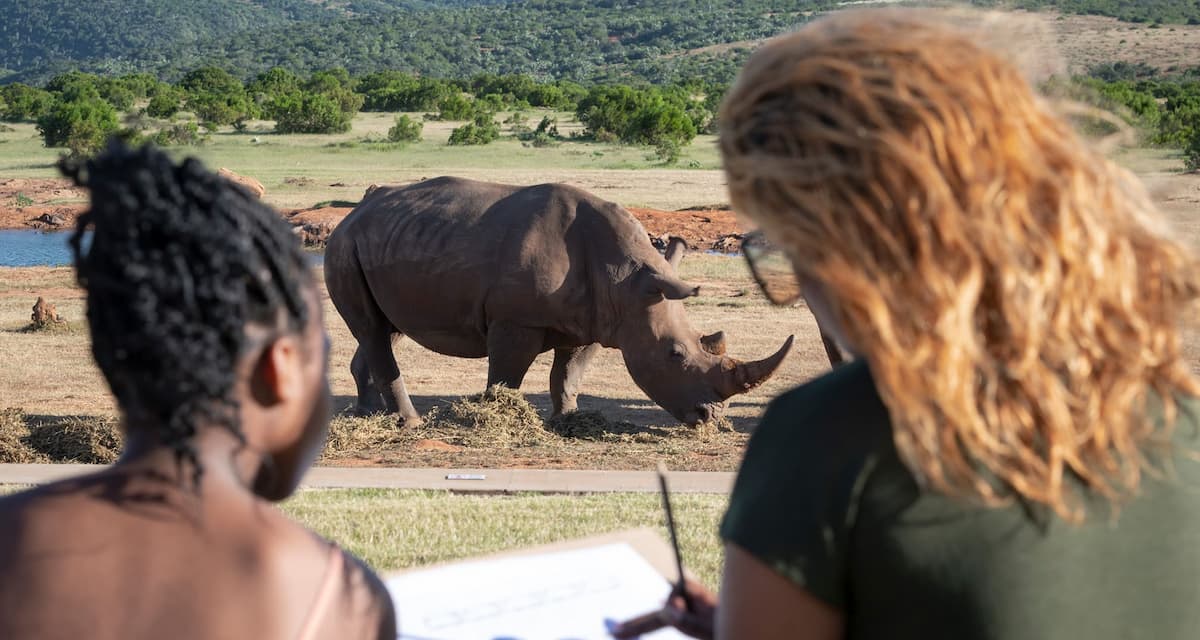
Three nights, the ideal length. The stay most experienced safari-goers settle on. Three nights gives the days a clear shape, allows time for the guiding relationship to develop, and provides a margin against weather: a single wet or windless drive out of five or six has little effect on the overall trip. It also leaves time for activities beyond the drives, the photographic hide, a nature walk, or time at the Founders Watering Hole.
Four to five nights, greater depth. A longer stay removes the sense of needing to see everything at once, and allows a more considered pace: the same waterhole at different hours, changing light, and a deeper familiarity with the reserve. It suits photographers, honeymooners, and travellers combining Founders with the wider Eastern Cape. For guests travelling a long distance, the additional nights are often worthwhile.
How Many Days to See the Big Five?
This is the most frequently asked version of the question, and it deserves a direct answer. No reserve can guarantee the Big Five in any number of days, because the animals are wild and free-ranging. Any guarantee of sightings should be treated with caution.
What a low-density private reserve offers instead is the strongest possible odds across consecutive drives: qualified field guides who track and interpret the reserve, a limited number of vehicles at any sighting, off-road positioning where terrain and conservation rules allow, and Big Five country reached with traversing rights on Shamwari. Most guests see a great deal over a two- to three-night stay. The useful way to think about it is in terms of probability rather than a checklist, more consecutive drives mean more opportunities, which is the practical argument for a third night.
A Sample Three-Night Rhythm
An indication of how the nights unfold, rather than a fixed schedule, built from our guide to what a day on safari really looks like.
| Day | Morning | Middle of day | Late afternoon / evening |
|---|---|---|---|
| Day 1, arrival | Travel; arrive from midday | Settle in; lunch | First game drive; sundowners; dinner |
| Day 2 | Dawn drive; breakfast | Pool, the hide, or a nature walk | Afternoon drive into the evening |
| Day 3 | Dawn drive; breakfast | Conservation or wildlife activity; lunch | Final afternoon drive; dinner |
| Day 4, departure | A last dawn drive; breakfast; check-out | Onward travel | , |

How the Safari Fits a Wider Trip
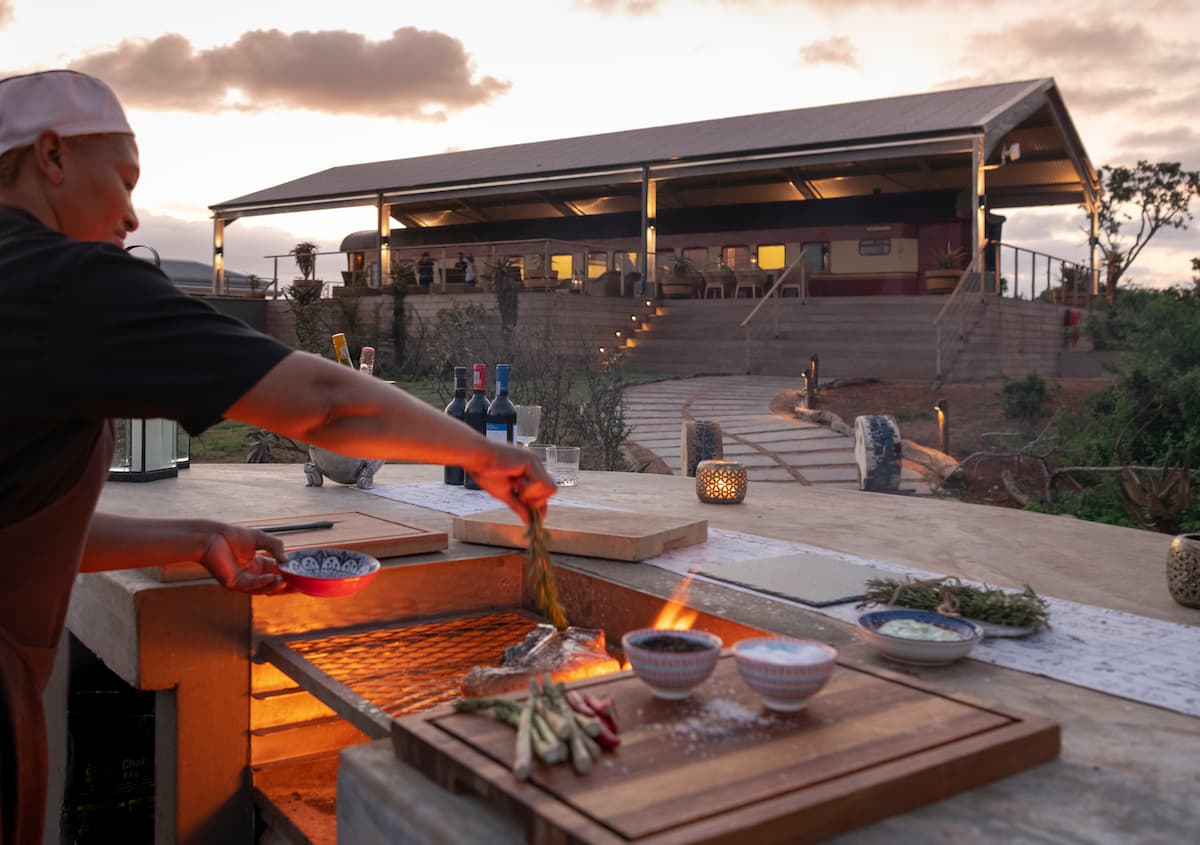
For many guests, the safari forms one part of a longer Eastern Cape or Garden Route journey. Founders is an easy drive from Gqeberha and a short flight from Cape Town, which makes it a natural conclusion to a wider trip rather than a detour.
A note on extending a stay: it is not unusual for guests to reach the end of a two-night stay and wish they had booked a third. Extensions depend on suite availability, so travellers who think they may want an additional night are advised to book it in advance rather than on arrival.
How Long Should You Stay?
| Traveller | Suggested length |
|---|---|
| Adding safari to a full Eastern Cape itinerary | 1 to 2 nights |
| A first-timer wanting a full safari without a long trip | 2 to 3 nights |
| Most first safaris, the balanced choice | 3 nights |
| Photographers, or those wanting depth and downtime | 4 to 5 nights |
| Honeymoon travellers | 3 to 5 nights |
| Travellers coming a long distance | 4+ nights |
Questions travellers ask
How many days do you need on safari?
For a first safari at a private reserve, three nights is generally ideal, enough drives for the experience to develop, and enough margin that a single poor-weather drive does not define the trip. Two nights makes a worthwhile short safari; four or five add greater depth.
Is one night on safari worth it?
It works as a taste, or as an addition to a wider trip, and a single good drive can be memorable. However, it ends before the reserve has shown its full range. Where possible, an additional night is recommended.
How many days do you need to see the Big Five?
No reserve can guarantee the Big Five in any number of days, as wildlife is free-ranging. Consecutive guided drives, skilled tracking and traversing access raise the odds, which is the practical case for a three-night stay.
How many game drives are there per day?
Usually two, one in the early morning and one in the late afternoon into evening, when wildlife is most active. The middle of the day is for rest, the pool, the photographic hide or a nature walk.
Can I extend my stay once I arrive?
Often, subject to suite availability. Travellers who think they may want an additional night are advised to book it in advance. Contact reservations to arrange a stay.
Continue reading
- → What a Day on Safari at Founders Lodge Really Looks Like
- → How to Get to Founders Lodge: Flights, Drives & Transfers
- → Combining Cape Town, the Garden Route & an Eastern Cape Safari